FREE SHIPPING FOR PUCHASES OVER AED 1,500 | DELIVERY BY EUROPEAN WAREHOUSE IN 20 - 30 DAYS
FREE SHIPPING FOR PUCHASES OVER AED 1,500 | DELIVERY BY EUROPEAN WAREHOUSE IN 20 - 30 DAYS
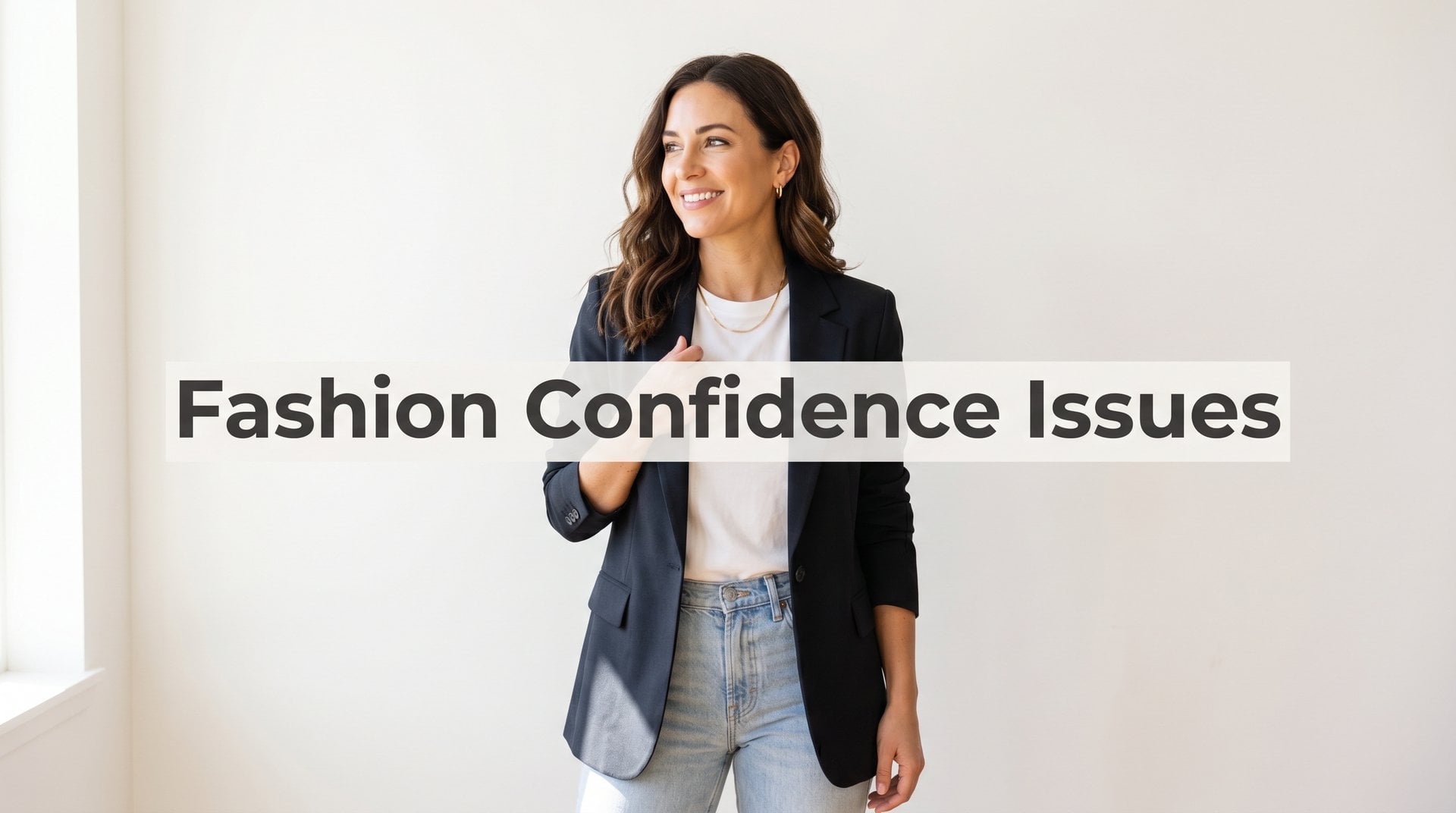
Fashion Confidence Issues: Why They Happen and How to Finally Break Free
Fashion confidence issues affect women of all ages, sizes, and style experience levels, often showing up as that paralyzing feeling of having nothing to wear despite a full wardrobe. This guide explores why these struggles are so deeply rooted and offers practical, compassionate strategies to help you finally feel at home in your own clothes and confident in how you present yourself to the world.
You’re standing in front of a wardrobe packed with clothes, and somehow, nothing feels right. Nothing feels like you. You’ve been there before — maybe this morning, maybe last week before that dinner you almost talked yourself out of attending. If that scenario sounds familiar, you’re in very good company.
Fashion confidence issues are one of the most common yet least-talked-about struggles women experience. They don’t discriminate by age, size, or how many years you’ve been shopping. They show up for the woman who’s just had a baby and doesn’t recognize her body anymore. They show up for the woman who’s worn the same safe rotation of outfits for three years. They show up for the woman who loves fashion in theory but freezes the moment she has to actually get dressed for something important.
This isn’t about not caring enough or not trying hard enough. It’s about a complicated, deeply human relationship between how we look, how we feel, and how we move through the world. And the good news? That relationship can absolutely change. This article is here to help you understand where fashion confidence issues come from, what they actually cost you, and most importantly, how to start shifting things in a direction that genuinely lifts you up. Consider this your warm, judgment-free starting point.
The Many Faces of Fashion Confidence Issues
When most people hear the phrase “fashion confidence issues,” they immediately think of body image. And while body image is absolutely part of the picture, it’s far from the whole story. Fashion confidence issues are broader, more nuanced, and often more surprising in how they show up.
At their core, fashion confidence issues are any recurring patterns of discomfort, anxiety, or disconnection around getting dressed. That might look like feeling lost with your personal style, not knowing what actually suits you or represents who you are. It might look like a fear of judgment, worrying that you’ll be seen as trying too hard, not trying hard enough, or simply getting it “wrong.” It might feel like being stuck between two uncomfortable extremes: feeling too much in a bold outfit or completely invisible in something safe and muted.
Here’s how these issues tend to manifest in everyday life:
The Safe Outfit Loop: You reach for the same two or three combinations on repeat, not because you love them, but because they feel reliably inoffensive. The rest of your wardrobe hangs unworn, waiting for a version of yourself you haven’t quite stepped into yet.
Category Avoidance: There are entire sections of fashion you’ve quietly ruled out for yourself. Maybe you haven’t worn a dress in years. Maybe bold colors feel too risky. Maybe you avoid anything fitted, anything flowy, or anything that draws attention. These avoidances often feel like personal preferences, but they’re frequently rooted in old messages about what you’re “allowed” to wear.
Event Anxiety: A wedding invitation arrives and instead of excitement, you feel a low hum of dread. What do you wear? Will you be overdressed? Underdressed? Will you feel awkward in photos? Occasion dressing becomes a source of stress rather than an opportunity to shine.
The Disconnect: You look in the mirror and feel like the person looking back doesn’t quite match who you feel like on the inside. Your clothes feel like a costume rather than an expression of self.
These experiences exist on a spectrum. For some women, it’s a mild, occasional frustration. For others, it’s a daily source of stress that affects mood, productivity, and willingness to engage with the world. Neither experience is more valid than the other, and both deserve attention.
Recognizing your own patterns is genuinely the first step. Not to judge yourself for them, but to understand them. Because once you can name what’s happening, you can begin to change it. Exploring the Posh Popup blog is a great place to find supportive guidance as you start that process.
Where These Feelings Actually Come From
Fashion confidence doesn’t erode in a vacuum. There are real, identifiable forces at work, and understanding them takes the blame off your shoulders where it absolutely does not belong.
One of the most pervasive influences is societal beauty standards. From a young age, women absorb deeply specific messages about which body types are desirable, which are acceptable, and which should be minimized or hidden. Fashion advertising has historically amplified a very narrow ideal, and while the industry is slowly diversifying, those early imprints run deep. Many women carry internalized rules about what their body type “should” wear, rules that were never actually theirs to begin with.
Past comments from others also leave lasting marks. A throwaway remark from a parent, a friend, or a partner about a particular outfit or body part can quietly shape dressing choices for years. These comments don’t have to be cruel to be damaging. Sometimes the most lasting damage comes from well-meaning observations delivered at the wrong moment.
Then there’s social media. The constant stream of curated, filtered, and often heavily styled imagery creates a comparison pressure that’s genuinely difficult to escape. Many women report feeling less confident about their own style after scrolling through fashion content, even when they went in looking for inspiration. It’s widely recognized that this kind of exposure can make real, everyday dressing feel inadequate by comparison, particularly when the images represent a lifestyle or body type that feels out of reach.
The shopping experience itself deserves a mention here too. Inconsistent sizing across brands is a well-documented industry issue: the same woman can be a size 10 in one brand and a size 14 in another, which makes trying on clothes a genuinely disorienting experience. Add unflattering fitting room lighting, limited size ranges, and mannequins that represent a fraction of actual body diversity, and it becomes clear why shopping often leaves women feeling worse, not better, about themselves.
Life transitions are another significant trigger that doesn’t get enough airtime. Style coaches and fashion therapists, a real and growing professional category, frequently note that major life changes disrupt women’s sense of style identity. Postpartum body changes, career shifts, divorce, weight fluctuations, and aging can all leave a woman feeling disconnected from both her wardrobe and herself. The clothes that used to feel like “her” no longer fit, literally or figuratively, and she hasn’t yet figured out what comes next. Browsing a dedicated momwear collection can be a gentle first step for women navigating postpartum style changes.
Understanding these roots isn’t about assigning blame. It’s about recognizing that your fashion confidence issues didn’t come from nowhere, and they certainly didn’t come from some fundamental flaw in you. They came from living in the world as a woman. And that means they can be unlearned.
The Real Cost of Dressing Without Confidence
It might be tempting to think of fashion confidence issues as a superficial concern, something trivial compared to “real” problems. But the ripple effects of dressing without confidence are more significant than most people realize, and they touch areas of life that have nothing to do with fashion.
There’s a genuinely fascinating psychological concept worth knowing here: enclothed cognition. Coined by researchers Adam and Galinsky in a 2012 study published in the Journal of Experimental Social Psychology, the concept describes how the symbolic meaning of clothing, combined with the physical experience of wearing it, can influence our psychological processes. In other words, what we wear doesn’t just affect how others see us. It affects how we think, how we feel, and how we perform. Putting on an outfit that makes you feel capable, attractive, or like yourself can genuinely shift your internal state. Wearing something that makes you feel uncomfortable or invisible can do the opposite.
This plays out in practical ways every day. When you don’t feel confident in what you’re wearing, you carry that discomfort with you. You might find yourself tugging at your clothes, avoiding eye contact, or holding back in conversations. You might leave a party early because you feel out of place, or turn down an invitation altogether because the thought of figuring out what to wear feels like too much.
There’s also a financial cost that often goes unacknowledged. Many women caught in cycles of fashion confidence issues end up overspending on clothes they never actually wear. The purchase feels hopeful in the moment, a fresh start, a new version of yourself, but without the underlying confidence to actually reach for those pieces, they sit with tags on until eventually being donated. The wardrobe grows but the confidence doesn’t.
And then there are the moments that matter most: job interviews, first dates, milestone celebrations, important presentations. Feeling underprepared in what you’re wearing for these moments adds an unnecessary layer of stress to situations that are already high-stakes. You deserve to walk into those rooms feeling ready.
Here’s the reframe worth holding onto: understanding this cost isn’t meant to pile on pressure. It’s meant to illuminate why this matters. Getting dressed with genuine confidence is a form of self-care. It’s one of the few daily rituals that can set the tone for your entire day, and you deserve to experience it that way. Investing in quality innerwear that fits properly is one of the simplest ways to build that foundation from the inside out.
Practical Ways to Rebuild Your Style Confidence
Rebuilding fashion confidence is less about a dramatic wardrobe overhaul and more about a series of small, intentional shifts. The goal isn’t to transform into a different woman. It’s to feel more like yourself every time you open your wardrobe.
Start with a joy-and-fit audit: Go through your wardrobe and ask one simple question about each piece: does this make me feel good when I put it on? Not “is this on trend?” Not “did it cost a lot?” Not “should I keep it?” Just: does it make me feel good? Keep what does. Let go of what doesn’t, regardless of the reason you bought it. This process alone can be quietly transformative, because it shifts the criteria from external rules to your own felt experience.
Build a foundation around your real life: The capsule wardrobe concept, originally coined by stylist Susie Faux in the 1970s and later popularized by Donna Karan, is built on a simple but powerful idea: a small collection of versatile, well-fitting pieces that work together gives you more to wear than a wardrobe full of disconnected items. Think about your actual weekly life, not an aspirational version of it. What do you genuinely need to dress for? Start there.
Experiment in low-stakes ways: You don’t have to reinvent your entire look at once. Try one new color in a category you already feel comfortable in. Try a new silhouette in a fabric that feels familiar. Daywear and loungewear are wonderful starting points for gentle experimentation because the stakes feel lower. A relaxed wide-leg trouser or a softly printed top is an easy way to try something slightly new without feeling exposed. Small experiments build evidence that you can try new things and feel good, and that evidence compounds.
Dress for your actual life, not an aspirational one: This is perhaps the most important shift of all. Fashion confidence doesn’t come from chasing someone else’s aesthetic or curating a wardrobe for a life you don’t live yet. It comes from clothes that genuinely work for your real schedule, your real body, and your real personality. The woman who wears what she loves in her actual daily life is always more magnetic than the woman wearing what she thinks she “should” wear.
Progress here is rarely linear, and that’s perfectly fine. Some days you’ll feel great in what you’ve put on. Other days you’ll go back to the safe rotation, and that’s okay too. The goal is a gradual, genuine shift in how getting dressed feels, from something to get through to something that brightens your day.
Dressing for Every Occasion Without the Anxiety
Occasion dressing is where fashion confidence issues tend to peak. A regular Tuesday is manageable, but a wedding? A job interview? A holiday party where you don’t know anyone? Suddenly the stakes feel enormous and the wardrobe feels woefully inadequate.
The good news is that a simple framework can take most of the anxiety out of occasion dressing. It comes down to three things: know the context, choose comfort-meets-style, and give yourself permission to stand out.
Know the context: Understanding the dress code, even loosely, removes a huge amount of uncertainty. “Smart casual,” “cocktail attire,” and “black tie” all mean something specific, and a quick search will tell you what. Once you know the parameters, you’re working within a structure rather than in a void. That structure is actually freeing.
Choose comfort-meets-style: The outfit that photographs beautifully but makes you uncomfortable all evening is never the right choice. Confidence comes from feeling at ease in your body, which means prioritizing clothes that fit well, feel comfortable to move in, and don’t require constant adjustment. Style and comfort are not mutually exclusive. The intersection of the two is where your best looks live.
Give yourself permission to stand out: Many women dress down for occasions out of a fear of being “too much.” But standing out in a way that feels authentic to you is never too much. It’s the point. If you love color, wear it. If you love a statement earring, wear it. The women who are remembered at events are rarely the ones who played it safe.
Having go-to outfit formulas for different types of occasions is one of the most practical confidence tools available. Once you’ve found what works for you in a given context, whether that’s a particular silhouette for formal events or a specific combination for casual outings, you can return to that formula with confidence rather than starting from scratch every time. Decision fatigue is a real contributor to dressing anxiety, and having reliable formulas dissolves it. Exploring a well-curated daywear range can help you identify those go-to silhouettes faster.
Most importantly, try to shift how you think about occasion dressing. Every event is an opportunity to express a facet of yourself and to feel genuinely seen. That’s not a burden. That’s actually a gift.
Building a Wardrobe That Works With You, Not Against You
There’s a quiet revolution that happens when your wardrobe stops feeling like a source of frustration and starts feeling like a resource. Getting there isn’t about spending more. It’s about spending smarter and choosing with intention.
Shift from buying more to buying better: A wardrobe full of pieces that almost work is more exhausting than a smaller wardrobe full of pieces that genuinely do. When you invest in key categories, daywear you’ll actually reach for, shoes that are both comfortable and stylish, innerwear that makes everything sit better, you reduce the daily friction that feeds confidence issues. Each piece that genuinely works for your body and lifestyle is one less obstacle between you and getting dressed with ease.
Prioritize fit above everything else: This is the single most impactful thing you can do for your fashion confidence. Clothes that fit well are universally flattering, full stop. They don’t require a particular body type to look good. They just need to be the right size and cut for the body wearing them. Sizing inconsistency across brands means that your number or letter on a label is almost meaningless. What matters is how the garment fits your actual body. Don’t be afraid of alterations. A simple hem or a taken-in seam can transform a piece from “almost right” to “exactly right.” And seek out brands with genuinely inclusive sizing so that fit is a real option, not a compromise.
Build confidence through small wins: One great pair of shoes that makes you stand a little taller. One dress that earns you a genuine compliment. One outfit that makes you feel ready for anything the moment you put it on. These moments might seem small, but they’re not. They’re evidence. They tell you, in a felt and embodied way, that you are capable of dressing in a way that feels good. And that evidence accumulates over time into something much larger: a genuinely confident relationship with fashion. Discovering trusted fashion brands that consistently deliver on fit and quality is one of the most reliable ways to keep those wins coming.
The wardrobe that works with you rather than against you isn’t built overnight. But every intentional choice, every piece that truly fits, every small win, moves you closer to a version of getting dressed that feels like a pleasure rather than a problem.
Your Brightest Chapter Starts Here
Fashion confidence isn’t a destination you arrive at once and stay forever. It’s a living, evolving relationship with yourself and your style, one that shifts as you shift, grows as you grow, and deepens the more attention you give it.
You don’t need to have it all figured out. You don’t need the perfect wardrobe, the perfect body, or the perfect sense of style. What you need is a willingness to start where you are, to notice what makes you feel good, to gently let go of the rules that were never yours, and to give yourself permission to enjoy getting dressed.
Every woman deserves to open her wardrobe in the morning and feel something other than dread. She deserves to walk out of the door feeling like herself, feeling ready, feeling bright. That’s not a luxury. That’s something you’re entirely entitled to.
The journey toward fashion confidence is made up of small, meaningful steps: a wardrobe audit, one new color tried, one outfit that made you smile at your reflection. Each step matters. Each one builds on the last.
When you’re ready to take one of those steps, we’d love to be part of it. Posh Popup’s curated collection is designed for real women living real lives, with pieces that feel as good as they look. Learn more about our services and find the pieces that feel like you.