FREE SHIPPING FOR PUCHASES OVER AED 1,500 | DELIVERY BY EUROPEAN WAREHOUSE IN 20 - 30 DAYS
FREE SHIPPING FOR PUCHASES OVER AED 1,500 | DELIVERY BY EUROPEAN WAREHOUSE IN 20 - 30 DAYS
How to Buy Stylish Clothes for Women: Your Complete Guide to Shopping Smarter
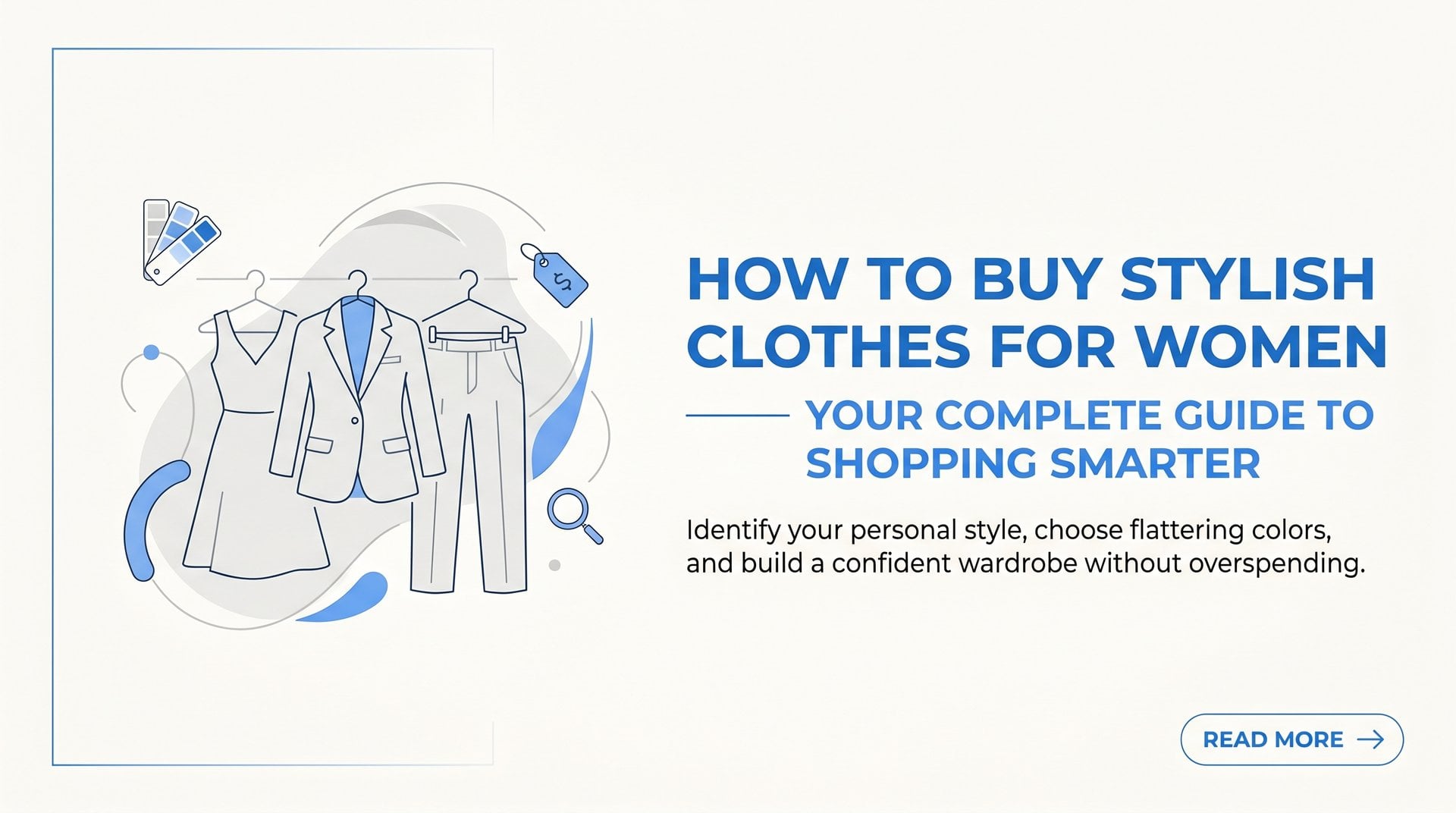
This complete guide helps you buy stylish clothes for women more intentionally by teaching you how to identify your personal style, choose flattering colors, and make confident purchasing decisions that build a wardrobe where everything works together — without overspending or chasing trends.
You’re standing in front of a wardrobe packed with clothes, and somehow, nothing feels right. Sound familiar? It’s one of the most common frustrations in fashion, and it has very little to do with how many items you own. The real issue is usually simpler: the pieces don’t work together, they don’t reflect who you are right now, or they were bought in a moment of impulse rather than intention.
Here’s the good news. Learning how to buy stylish clothes for women isn’t about spending more or chasing every trend. It’s about developing a clearer sense of what you actually love, what genuinely fits your life, and how to make confident choices whether you’re browsing a boutique or scrolling through an online store at midnight.
Stylish dressing is a skill, and like any skill, it gets easier the more you understand the fundamentals. When you know your personal style, understand which colors light you up, and can read a size guide without second-guessing yourself, shopping transforms from a stressful chore into something genuinely enjoyable. It becomes discovery rather than overwhelm.
This guide is designed to walk you through exactly that. We’ll cover how to define your personal style before you spend a single penny, how to decode color theory in a way that’s actually useful, why fit matters more than any other factor in looking polished, and how to navigate women’s fashion online with confidence and intention. Whether you’re building a wardrobe from scratch or simply trying to shop smarter, these principles will help you put together looks that feel authentically, effortlessly you.
Think of this as the advice your most stylish friend would give you over coffee. Honest, practical, and genuinely exciting. Because fashion, at its best, is one of the most joyful forms of self-expression there is. Let’s make it work for you.
Know Your Style Before You Shop
The single most powerful thing you can do before opening a shopping app or walking into a store is to get clear on your personal style. Without that clarity, even the most beautiful pieces can end up hanging unworn because they don’t connect to anything else you own or reflect how you actually want to feel when you get dressed.
A useful starting point is exploring style archetypes. These are broad categories that capture different aesthetic sensibilities: classic, bohemian, minimalist, romantic, eclectic, and more. They’re not rigid boxes to squeeze yourself into. Think of them as helpful shorthand that gives your shopping a direction. If you identify strongly with a minimalist aesthetic, for example, you’ll naturally gravitate toward clean lines, neutral palettes, and understated silhouettes. Knowing that upfront means you spend less time deliberating over a maximalist printed blouse that catches your eye but would never sit comfortably alongside the rest of your wardrobe.
This kind of self-knowledge genuinely saves money. Decision fatigue is real, especially when browsing women’s fashion online where the options are essentially endless. Having a style compass narrows your focus, speeds up your decisions, and dramatically reduces the likelihood of buyer’s remorse.
One practical way to develop that compass is by building a style mood board. This doesn’t have to be elaborate. Save outfits you love on Pinterest, screenshot looks from accounts you admire, or even clip images from magazines. After a few weeks, look at what you’ve collected. Patterns will emerge. Maybe you’re consistently drawn to earthy tones and flowy fabrics. Maybe you keep saving sharp tailored looks with a bold accessory. Those patterns are telling you something important about your authentic aesthetic preferences.
The mood board works because it bypasses the in-the-moment excitement of a sale or a trend and connects you to what you genuinely love over time. It’s a record of your taste, not your impulses.
From there, it’s worth adopting what stylists and sustainable fashion advocates call the capsule wardrobe mindset. The core idea is that a well-chosen collection of versatile, foundational pieces forms the backbone of a stylish wardrobe. These are the items you reach for constantly: a well-cut pair of trousers, a quality white shirt, a blazer that works for three different occasions, a dress that transitions from day to evening. Around these anchors, you layer trend-driven pieces that add personality and freshness.
The distinction matters because trend pieces have a shorter lifespan. They’re exciting when they’re current, but they can feel dated quickly. Foundational pieces, on the other hand, earn their cost per wear over years. When you shop with this framework in mind, every purchase has a clear role to play. You’re not just buying something you love in isolation. You’re building something cohesive.
Cracking the Color Code: How to Choose Shades That Work for You
Color is one of the most powerful tools in your style kit, and also one of the most misunderstood. Most of us have experienced that strange phenomenon where one color makes our face look radiant and another seems to drain all the life out of us. That’s not coincidence. It’s color theory at work.
The foundational concept here is undertone. Your skin has an underlying hue that sits beneath its surface color, and it’s either warm (yellow, peachy, or golden undertones), cool (pink, red, or bluish undertones), or neutral (a mix of both). This undertone influences which colors sit harmoniously against your complexion and which create visual contrast that can look jarring rather than intentional.
A simple way to check your undertone: look at the veins on the inside of your wrist. If they appear greenish, you likely have warm undertones. If they look blue or purple, cool undertones are more likely. If you see both, you’re probably neutral, which means you have the most flexibility of all.
Warm undertones tend to be flattered by earthy, golden, and rich shades: terracotta, olive, warm browns, mustard, and deep oranges. Cool undertones often look beautiful in jewel tones and icy shades: cobalt blue, emerald, burgundy, lavender, and crisp white. Neutral undertones can genuinely wear almost anything, which is a wonderful position to be in.
That said, this is a guide, not a rule. Fashion is ultimately about how you feel, and if a color brings you joy, that energy comes through regardless of undertone theory. Use this as a starting point for exploration, not a set of restrictions.
When it comes to building a functional color wardrobe, think in two categories. The first is your neutral anchors: whites, creams, greys, taupes, camel, and navy. These form the connective tissue of your wardrobe, pairing effortlessly with almost everything and giving your statement pieces a clean backdrop to shine against.
The second category is your accent colors. These are the shades that express your personality and lift an outfit from functional to memorable. A pop of red, a burst of cobalt, a rich violet, a warm coral. These are the pieces that make people say, “I love that color on you.” They don’t need to be everywhere. Even one accent piece in an outfit is enough to create visual interest and energy.
To build color harmony within a single outfit, stylists often recommend working with three layers: a dominant color (the largest area, usually your base), a secondary tone (a complementary or tonal shade), and an accent (a contrasting pop). Think a camel coat over a cream blouse with a burgundy bag. Or a navy midi dress with a white blazer and a mustard scarf. This three-part structure creates balance without making an outfit feel flat or over-matched.
Thinking about color this way before you buy stylish clothes for women means every new piece has a natural home in your existing wardrobe. You’re not just buying a beautiful item. You’re buying something that plays well with others.
Fit Is Everything: Understanding Silhouettes and Sizing Online
If there’s one thing professional stylists agree on, it’s this: fit matters more than any other factor. A beautifully made garment in a gorgeous color can look entirely unremarkable if the fit is off. Conversely, a simple, affordable piece that fits perfectly can look genuinely elevated. Fit is the difference between looking polished and looking like you’re wearing someone else’s clothes.
This is especially important when you’re buying women’s clothing online, where you can’t try anything on before committing. The good news is that with a few practical tools and a bit of patience, you can dramatically improve your fit success rate.
Start with your measurements. Knowing your bust, waist, and hip measurements in centimeters or inches is the single most useful thing you can do before shopping online. To measure correctly: wrap a soft tape measure around the fullest part of your bust, keeping it parallel to the ground. For your waist, measure at the narrowest point, usually a few inches above your navel. For your hips, measure around the fullest part, typically about eight inches below your natural waist.
With these three numbers in hand, always cross-reference with the specific brand’s size guide rather than assuming your usual size will translate. Sizing varies significantly between brands, countries of manufacture, and even between different collections within the same brand. A size 12 in one label might fit like a 10 in another. The size guide is your most reliable navigation tool.
When you fall between sizes, a useful rule of thumb is to size up for the largest measurement and consider alterations for the rest. A skilled tailor can take in a waist or adjust a hem far more easily than you can add fabric where there isn’t any. It’s also worth reading customer reviews specifically for fit comments. Phrases like “runs small,” “generous in the hips,” or “true to size” from real customers are often more useful than the official size guide alone.
Beyond sizing, understanding silhouette is a powerful way to dress with more confidence and intention. Silhouette refers to the overall shape a garment creates on the body: A-line, fitted, oversized, structured, draped, and so on. Different silhouettes create different visual effects and feelings, and learning which ones resonate with you is a deeply personal process.
The key here is to approach silhouette choices from a place of empowerment rather than prescription. Forget the old-fashioned “dress for your body type” language, which often reduces diverse, beautiful bodies to problems to be solved. Instead, think about how different shapes make you feel. Do you love the confidence of a structured blazer? The ease of a relaxed wide-leg trouser? The elegance of a fitted midi dress? Your answers are your style data, and they’re far more useful than any generic rule.
Discovering Brands That Deliver on Style and Quality
Once you have clarity on your style, your colors, and your fit preferences, the next question becomes: where do you actually shop? The women’s fashion landscape is vast, and not all brands are created equal. Knowing what to look for beyond the aesthetic can save you from disappointing purchases and help you build genuine loyalty to labels that consistently deliver.
Start with fabric composition. This is one of the most reliable indicators of quality, and it’s almost always listed in the product description. Natural fibers like cotton, linen, silk, and wool tend to breathe better, age more gracefully, and feel more comfortable against the skin than synthetic alternatives. That’s not to say all synthetics are poor quality. Fabrics like modal and bamboo-derived viscose can be beautifully soft and drapey. But a product description heavy on polyester and light on natural content is often a signal about the garment’s longevity and feel.
Look also at how a brand talks about its production. Phrases like “ethically made,” “GOTS certified,” or “produced in small batches” suggest a brand that invests in quality control and responsible practices. This matters not just ethically but practically: brands that care about how their clothes are made tend to produce pieces that hold up better over time.
Consistent sizing across a brand’s collections is another quality marker worth noting. When a brand’s size 10 reliably fits the same way across different styles and seasons, it signals attention to detail in the design and production process. Inconsistent sizing, on the other hand, is often a sign of rushed production or multiple manufacturers with different standards.
When evaluating a brand you haven’t tried before, take time to read the full product description rather than just looking at the images. Note the fabric content, the care instructions, and any details about the cut or fit. Check whether the brand provides detailed measurements for each garment, not just a generic size guide. Look at customer reviews with a critical eye, paying particular attention to comments about quality after washing and whether the garment looks as good in person as it does in the photos.
This is where a curated multi-brand platform like Posh Popup makes the process genuinely easier. Rather than hunting across dozens of individual websites, a carefully selected collection brings together brands that have already been assessed for quality, style, and value. From everyday wardrobe essentials to elevated occasion wear, a multi-brand destination simplifies the search for stylish women’s clothing without sacrificing variety or discovery. You get the joy of exploring different aesthetics and price points in one place, with the confidence that the curation has done some of the vetting work for you.
Smart Online Shopping Habits That Stylish Women Swear By
Even with all the right knowledge, online shopping can still feel overwhelming if you don’t have a few practical habits in place. The sheer volume of choice available at any given moment is genuinely one of the biggest barriers to shopping well. Here’s how to cut through the noise.
Shop with intention, not impulse: Before you open a shopping site, have a loose brief in mind. Maybe you need a versatile top that works with three things you already own. Maybe you’re looking for an occasion dress for a specific event. Having even a rough idea of what you’re looking for activates your filters and keeps you from getting pulled into an endless scroll that ends with a basket full of things you don’t really need.
Use filters as your best friend: Most online stores let you filter by color, occasion, size, brand, and price. Use them. Filtering by color alone can be transformative if you’re building around a specific palette. Filtering by occasion helps you stay focused on what’s actually useful for your life right now rather than what’s simply beautiful in the abstract.
Read the return policy before you buy: A generous, straightforward return policy is your safety net when buying clothes online without the ability to try them on first. If a brand offers free returns or extended return windows, you can shop with more confidence, knowing that a sizing misjudgment isn’t a costly mistake. Make this a habit rather than an afterthought.
Study the fabric description as carefully as the photos: Product photography is designed to make everything look its best. The fabric description tells you what you’ll actually be wearing. Before adding anything to your basket, read the composition, check the care instructions, and ask yourself honestly whether you’ll maintain it properly. A dry-clean-only silk blouse might be beautiful, but if you know it’ll sit unworn because of the upkeep, it’s not the right purchase for your life.
Time your shopping strategically: New arrivals and seasonal drops are often the best time to access the freshest selection before popular sizes sell out. Many brands also offer curated edits around key moments in the fashion calendar, which can be a genuinely useful shortcut for discovering pieces that work together as a cohesive wardrobe update rather than isolated items.
Shopping this way takes a little more thought upfront, but it pays off in a wardrobe that actually gets worn and a bank account that doesn’t suffer for it.
Your Stylish Wardrobe Starts Here
Here’s the mindset shift that ties everything together: learning how to dress stylishly is a skill built on self-knowledge, not an endless shopping spree. The women whose style you admire most aren’t necessarily spending the most. They’ve simply taken the time to understand what works for them, and they shop accordingly.
You now have the framework to do exactly that. You know how to identify your personal style before you spend anything. You understand how color theory can guide your choices without restricting your creativity. You know why fit is non-negotiable and how to navigate sizing online with confidence. You have a clearer sense of what quality looks like in a brand, and you have practical habits that make online shopping feel purposeful rather than overwhelming.
The next step is simply to begin. Pick one thing from this guide and act on it today. Define your style archetype and start a mood board. Measure yourself properly and update your go-to size reference. Explore a color you’ve always been drawn to but never quite committed to. Refresh one wardrobe staple that you’ve been meaning to replace for months.
And when you’re ready to discover stylish clothes for women that genuinely reflect your taste and brighten your everyday life, Posh Popup is here for exactly that. A curated destination for women’s fashion that makes discovery feel exciting, intentional, and effortlessly joyful. Learn more about our services and start building the wardrobe that feels unmistakably, brilliantly you.